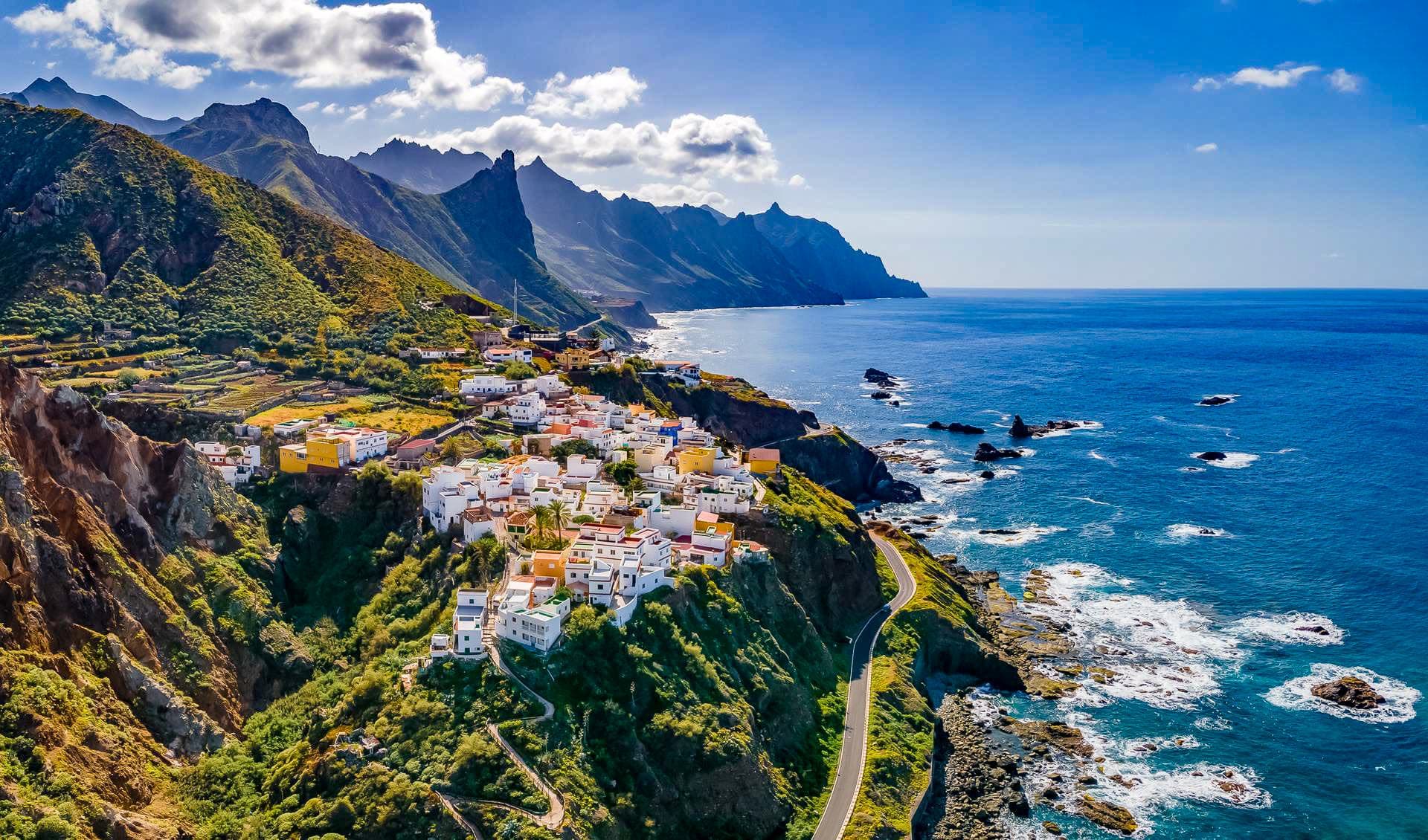
Tenerife is one volcano with an island attached. El Teide is Spain's highest point at 3,718 metres, famous enough to hold a Wikipedia article in 86 languages, and the road network treats it as the only destination that matters. Four classic climbs leave the ocean and arrive in Las Canadas, the crater at over 2,000 metres, and every one of them is longer than anything in the Alps because the Alps do not start at the beach. The TF-21 high point by the cable car sits at 2,356 metres, and the Izana observatory spur tops out at 2,390, the highest asphalt on the island.
Here is the honest version of the heritage. The Vuelta has never climbed Teide. The race's only Canary visit was 1988, a time trial in Santa Cruz and three island stages, and a four-stage 2026 finale with a queen stage to the Teide Observatory was agreed and then shelved. The island says it will keep bidding. What Tenerife has instead is the Parador, the lone hotel inside the national park at around 2,150 metres, and it is pro cycling's best-known altitude dormitory. Team Sky built the blocks behind the Tour wins of Wiggins, Froome and Thomas up here, Froome took the Teide Strava crown mid-camp, and Visma, Astana, Bahrain and Movistar have all followed until the winter booking sheet became a famous logjam. When Sierra Nevada and Livigno are under snow, the peloton is riding to this crater.
The local lore runs deeper than the camps. The first bicycle ascent is credited to Antonio Da Silva in 1923, up the north road from La Orotava, and every May the Vuelta al Teide gran fondo sends the island's biggest field over the Masca pass and into the park, 175 kilometres with about 4,400 metres of climbing on the UCI calendar. Base yourself low on either coast and the whole canon is a day ride. There is no season to wait for. That is the island's entire pitch.