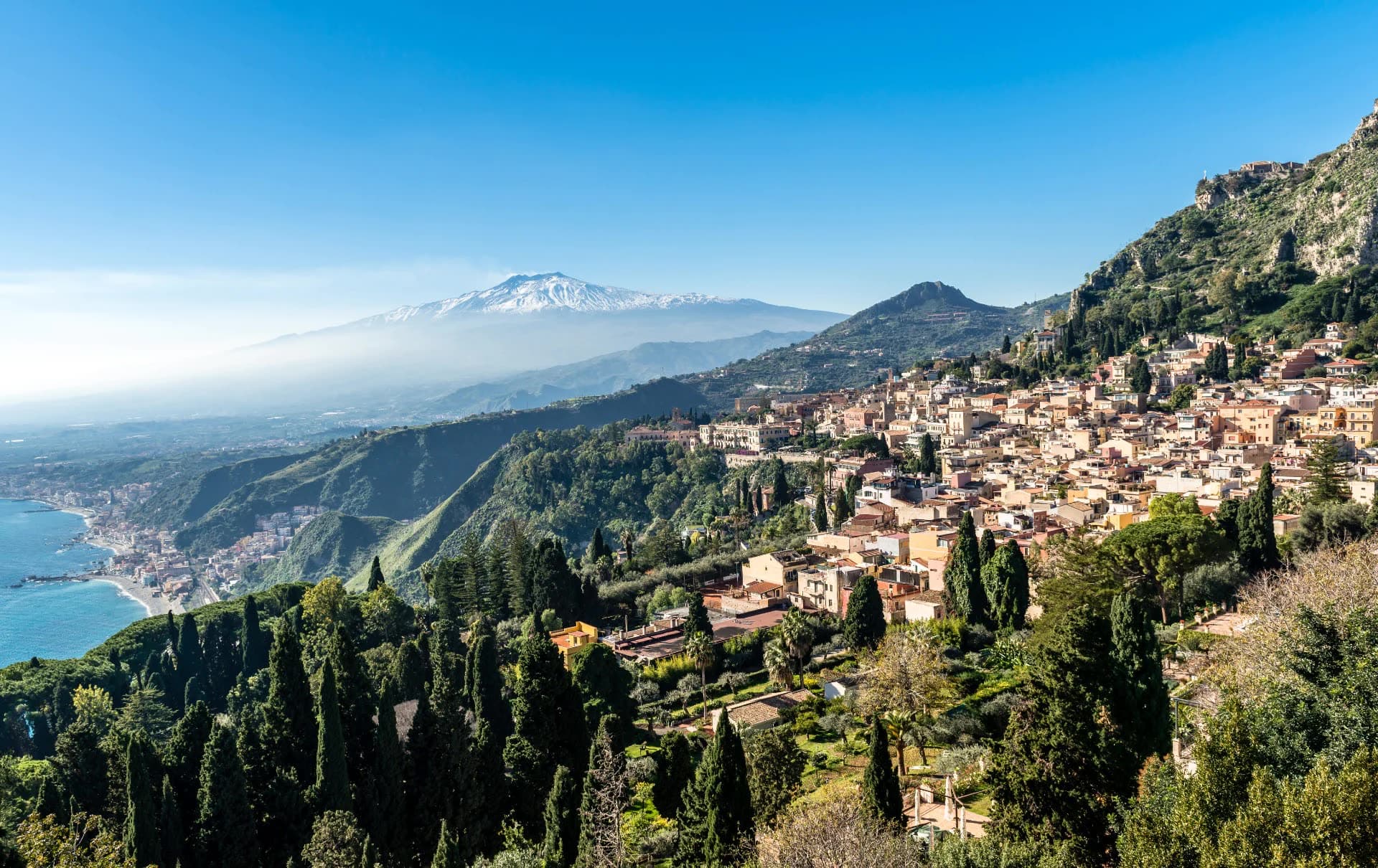
Sicily's cycling is built around a live volcano. Etna has been erupting for half a million years, and the four roads that climb it thread between lava flows you can date like tree rings, 1669 above Nicolosi, 1983 and 2001 by the Rifugio Sapienza, 2002 on the north side where the mountain erased the ski village of Piano Provenzana and the tarmac was simply laid back over the flow. The Giro d'Italia has made it a pilgrimage, seven summit finishes since 1967 spread across three different axes. Race director Angelo Zomegnan gave the mountain its title, Etna is our Mont Ventoux. He undersold it. Ventoux does not smoke.
An hour west along the coast, the Madonie hold the other half of the story. From 1906 to 1977 these mountains hosted the Targa Florio, the oldest sports car race in the world, run on a circuit of public mountain roads with around 800 corners per lap. Porsche built cars specifically to win here. Helmut Marko, who raced it, called it totally insane, and it was eventually stopped for exactly that reason. The corners are all still there. The road from Campofelice through Collesano up to Piano Battaglia, Sicily's improbable little ski station at 1,600 metres, may be the finest stretch of old racing tarmac a cyclist can ride anywhere.
The island rewards a split camp. Base on Etna's east flank, in Zafferana or Linguaglossa, and all four volcano roads are at your door. Then move west to the Madonie coast for the Targa circuit, Piano Battaglia from three sides and the empty Nebrodi crossing between the two ranges. Spring comes early and autumn stays late this far south, the sea is never more than an hour from any summit, and the food, from pistachio granita in Bronte to pasta alla Norma in Catania, does half the recovery work for you.