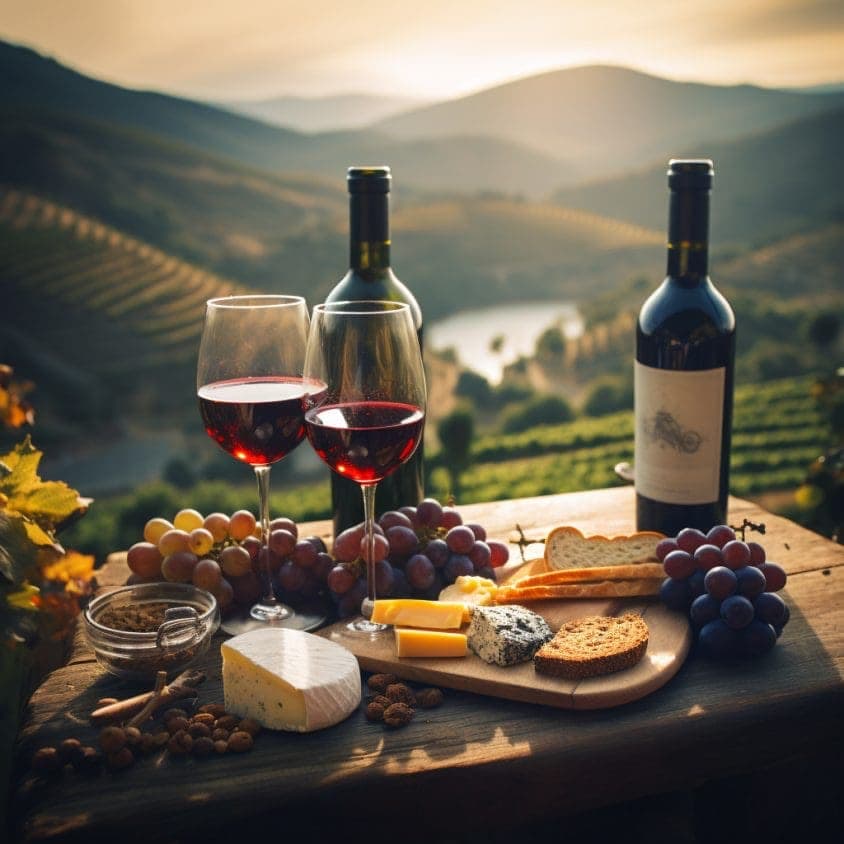
The Douro does not look like anywhere else you have ridden. In 1756 it became the world's first demarcated wine region, and three centuries of hands have carved its schist slopes into terraces that climb from the river like a contour map made real. The roads do the same. They leave the water at Pinhão or Covelinhas and simply go up, through quintas and stone-walled vineyards, to miradouros where the whole gorge bends below you. The climbs are short by Alpine standards and honest about it. Ten percent is normal here.
A hundred kilometres south the country changes register entirely. The Serra da Estrela is granite, glacial bowls and open plateau, and the road over it to Torre at 1,993 metres is the highest in mainland Portugal. This is the stage on which the Volta a Portugal has been settled since Joaquim Agostinho first won at the summit in 1971. Every August the race returns to the Torre and to Senhora da Graça, the sanctuary spiral above Mondim de Basto that Portuguese fans pack like their own Alpe d'Huez. The mythology is national rather than global, and it is fiercer for it.
The two landscapes make one trip because they answer each other. Base a few days in Pinhão for the vineyard walls and the river light, then move to Covilhã or Seia and trade terraces for the long high grinds of the Estrela. In between, the Marão crossing does what it has done for centuries and separates coastal Portugal from Trás-os-Montes. The roads are quiet, the coffee stops cost a euro, and almost nobody you know has ridden any of it.