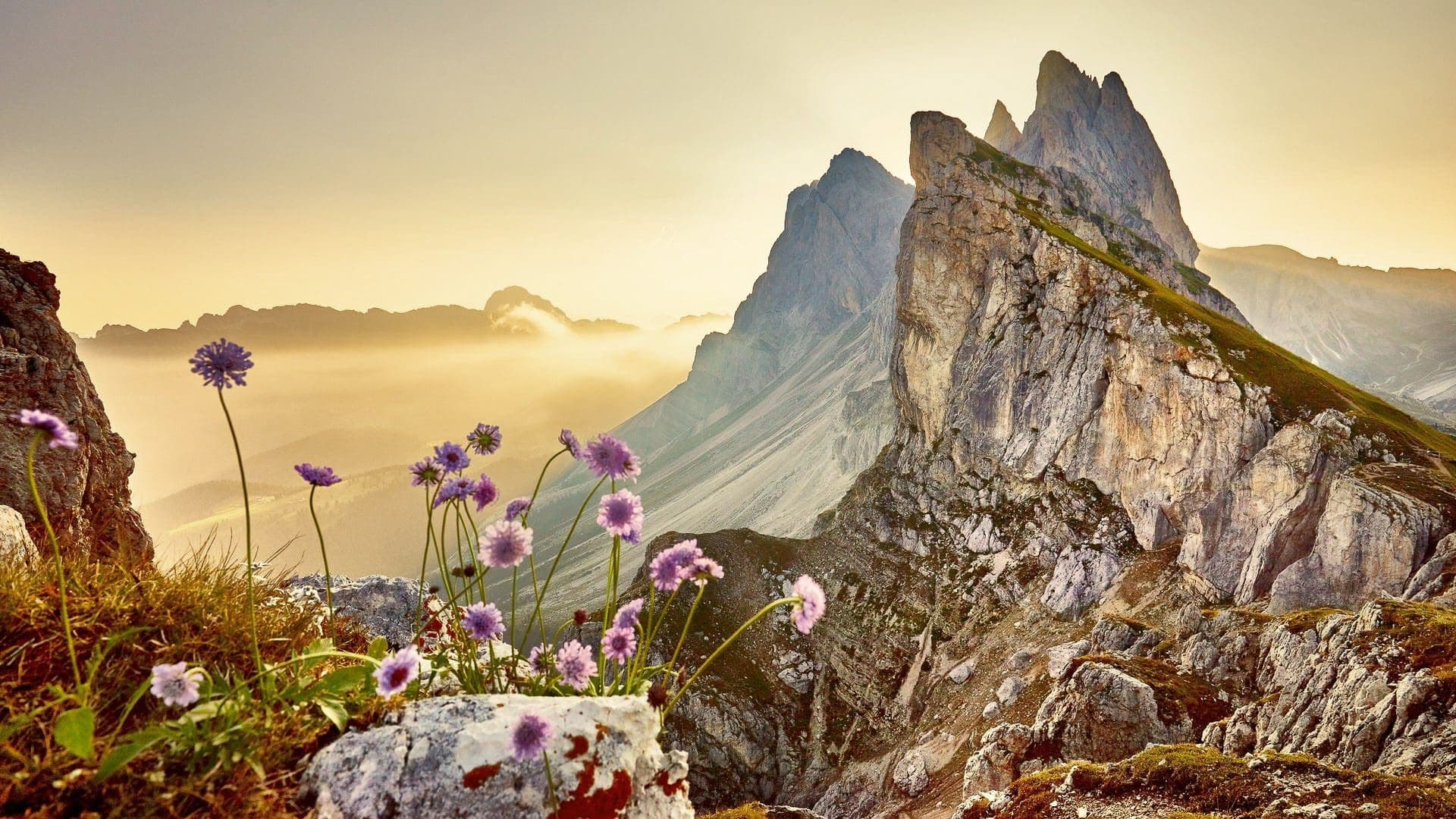
Nothing else in the Alps looks like this. The Dolomites are pale rock, not dark granite, and the great towers of the Sella, the Marmolada and the Tofane change colour through the day until they burn pink at dusk. The valleys between them speak Ladin, a language older than Italian, and the roads that link them were cut for armies and shepherds long before they became the most theatrical climbing in cycling.
This is the Giro d'Italia's heartland. The race first crossed these passes in 1937, and in 1940 a 20 year old Fausto Coppi cracked on the Pordoi, was pelted with snow by Gino Bartali until he rode again, and won the whole Giro. The Pordoi has been crossed by the race 39 times since, more than any other pass, and the monument at its summit carries Coppi's face. The modern race keeps writing chapters here. Egan Bernal won a Giro in the freezing rain on the Giau in 2021, and Jai Hindley broke the race open on the Fedaia's brutal final wall in 2022.
The geography is absurdly generous. Four passes ring the Sella massif so tightly that the Sellaronda, the full circuit over Campolongo, Pordoi, Sella and Gardena, fits inside 60 kilometres. Every July the Maratona dles Dolomites closes the roads and sends nine thousand riders around it. Base yourself in Alta Badia or Corvara and the whole canon is at your door.